Got questions or feedback?
Pages

BY MARIUS VENTER – December 15, 2025
“Never drive faster than your guardian angel can fly” – Mother Teresa
I’m Marius Venter—a professional driver, former police officer, and lifelong advocate for road safety. My years of disciplined, incident-free driving have taught me what truly keeps people safe on the road and what can lead to trouble. In this guide, I will break down the small details that make a significant difference: the everyday techniques, smart habits, and focused mindset that help you stay in control and prevent accidents before they happen.
Let’s get started.
Mirror Mastery: Your First Line Of Defense
As a beginner driver, you might not think much about the mirrors on your vehicle; you know they are there and that you need to use them. I made the same mistake. It wasn’t until years later that I began to understand how important mirrors, especially side mirrors, really are. First, always ensure that your vehicle’s mirrors are clean and properly adjusted. A good way to set your side mirrors is to use the following guideline: position the front door handle in the lower corner of the mirror closest to the door. The horizontal line of the horizon should always be around the center of the mirror. Setting your mirrors this way provides the best coverage of the side of your vehicle.
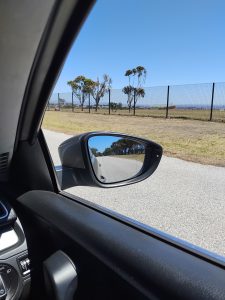
When changing lanes and feeling unsure about blind spots, it’s important to perform a quick shoulder check or a lean-in check. I personally prefer the lean-in technique, which involves leaning slightly forward while looking at your side mirrors. This method is effective for checking both sides of the vehicle and significantly enhances situational awareness while driving. By using your mirrors in this way, you can ensure that no hidden vehicles or potential dangers escape your view. The picture shows what you should see in your side mirrors from inside your car.
A Lesson From The Field
As a former police officer, I’ve seen the importance of checking mirrors before making a turn. Once, while a passenger in a patrol car, my colleague was turning right, across a seemingly empty national road. Suddenly, without warning, a car slammed into us from behind at high speed. This vehicle was overtaking us and ignored traffic signs, and we failed to check our side mirrors before turning. This situation highlights the importance of regularly checking side mirrors, especially before turns.
It is essential to note that when side mirrors are not set correctly, performing any reverse parking maneuver will be extremely difficult, if not impossible. Also, it is important to check mirrors every 5 to 8 seconds, as they can provide vital information that may help prevent accidents and save lives.
Please note: As a TEMU associate, I may receive a commission from sales on this website.
Clean Glass = Clear Judgement
Foggy windows, dew-covered mirrors, and dust streaks can significantly reduce visibility and increase glare while driving. To prevent this, be sure to clean your windows and mirrors thoroughly before you head out. It only takes about 2 minutes and can make a big difference in your safety. Fortunately, there are effective and easy-to-use window cleaners available that can help you achieve a crystal-clear view. You can find one HERE.
What’s Hanging From Your Mirror?
Air fresheners, keychains, and fluffy dice don’t belong on your rearview mirror. I have driven with and without these, and without is always better. Movement in your field of view creates a distraction. Additionally, I advise against placing anything on the dashboard that could distract you or obstruct your view while driving. While it may seem insignificant, I believe these things have a much bigger negative impact on concentration than people may think.
Mobile Phones: Modern Convenience, Massive Risk
It is illegal to use a mobile phone while driving in many countries, including South Africa. According to recent statistics, reckless or negligent driving is the leading cause of accidents in the country, but distracted driving, which includes using a mobile phone, is a close second. To stay safe on the road, it is important to avoid using your cell phone or mobile device while driving altogether. If you must use your phone, consider investing in a quality hands-free car kit; you can find a trendy one that’s new on the market HERE.
These devices allow you to make and receive calls without having to physically handle your phone, reducing the risk of accidents caused by distracted driving. Additionally, avoid using headphones or earphones while driving, as they can block out important sounds, such as horns or sirens, that could help you avoid an accident.
Traffic Circles: Know The Rules, Avoid The Chaos
Traffic circles, also known as roundabouts, can be a source of frustration for many people, despite their intended purpose. These circular intersections are sometimes referred to as “traffic calming measures,” and they are not as complicated to navigate as you might think. Except for going around clockwise, I follow two simple rules when using traffic circles: yield to vehicles approaching from the right, and never stop inside a circle for any reason once you’ve entered it.

Traffic circles are critical junctions where roads or streets intersect and can therefore become very busy at times. Stopping in these areas can hinder the normal flow of traffic, causing obstructions and confusion for drivers. If you are uncertain about your route or which exit to take, it is best to proceed cautiously around the circle or exit and pull over at a safe location to get your bearings.
Treat mini circles as four-way stops and be especially cautious around them, as they are often near buildings that can make it difficult to see approaching traffic. In urban areas, mini circles are often so small that it may be difficult to drive around them without crossing over the middle part of the circle. Reduce speed when approaching them, as they are more hazardous than larger traffic circles, simply because traffic may be more bundled up around them.
Hazard Lights: Not A Driving Mode
As someone who drives frequently, I’ve noticed that some minibus taxi drivers often have their emergency lights on. This practice can make it difficult for other drivers to stay aware of sudden changes in their surroundings. Hazard lights should only be used to signal an emergency or a sudden stop, for instance. I strongly recommend being extra vigilant around these vehicles, as they may change direction at any moment without warning. It’s important to maintain a safe distance from them to ensure everyone’s safety.
Indicators: Signal With Purpose
Signaling too early is just as dangerous as not signaling at all. If your turn signal is on while passing multiple entrances, other vehicles may misread your intentions, and accidents happen fast. It’s crucial to use turn indicators thoughtfully to avoid potential collisions. Be cautious not to signal your intention to turn too early, especially when there are other vehicles nearby. If you indicate a turn but then fail to turn when there are other entrances nearby, other drivers may assume you’re turning and collide with you. I’ve seen this happen before, so it’s essential to be mindful of this potential danger.
The Real Fix: Defensive Driving
If you’re reading this article, it’s clear that you’re eager to level up your driving skills and become a safer driver. I’m here to help you with that! There’s a proven system that teaches you to anticipate danger, read traffic patterns, and react before it’s too late. This system is called Defensive Driving and will make you a safer, more confident driver. You can take the FREE course HERE. By learning these techniques, you’ll be better prepared to handle any situation on the road.
Final Thoughts: Drive Like It Matters, Because It Does
Safe driving ultimately depends on being attentive to your actions and decisions behind the wheel. Stay alert, follow the rules of the road, and always consider other road users. By keeping these principles in mind and incorporating defensive driving techniques, you can greatly enhance your driving skills and become a more responsible driver.
In our next article:
* The basics of defensive driving, with examples
* How to master parallel parking easily
* Why your grip on the steering wheel might be all wrong

Hallo, ek wou jou prys ken.

Hallo, what is it you want to buy?
Sveiki, es gribēju zināt savu cenu.

Got questions or feedback?
Pages
© 2026 The Shielded Driver. All rights reserved.
Leave a Reply